

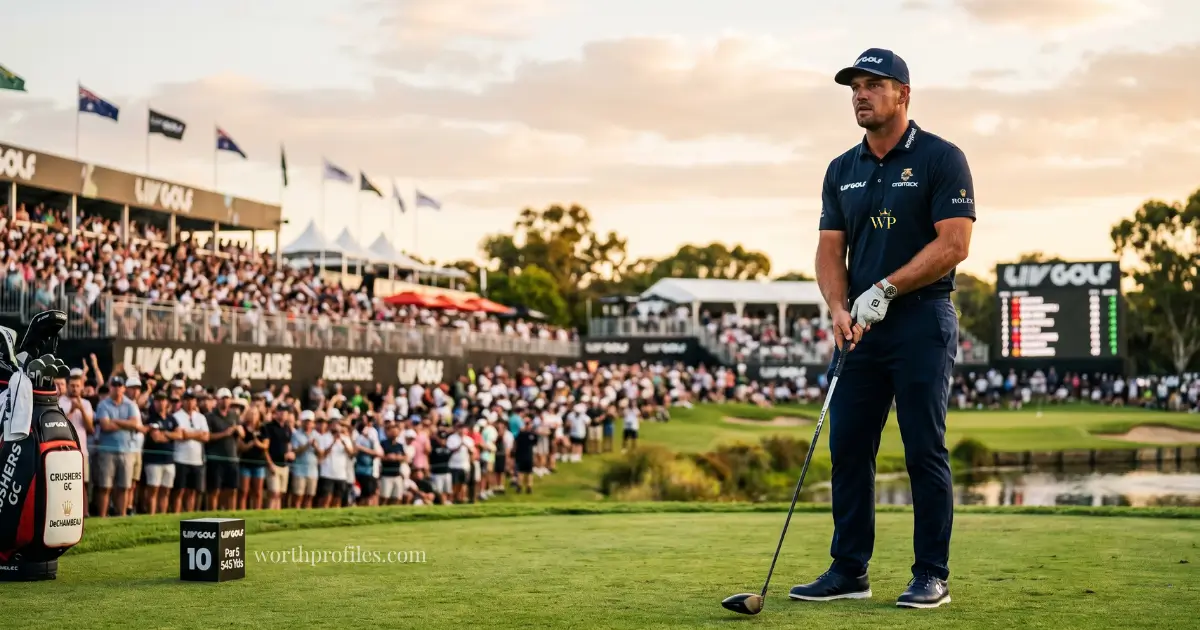
Trying to find a trustworthy estimate for Bryson DeChambeau’s net worth is harder than it should be because many articles either recycle old numbers or focus only on headlines about LIV Golf without explaining where the money actually comes from. As of 2026, Bryson DeChambeau net worth is believed to be around $50 million, with most of his wealth coming from LIV Golf earnings, tournament prize money, sponsorship deals, and long-term endorsements. A lot of readers want to know one thing: did LIV Golf completely change his financial future? The short answer is yes, but the full story goes much deeper than one contract.
Before joining LIV Golf, Bryson was already one of the most recognizable names on the PGA Tour thanks to his U.S. Open victory, power-focused playing style, and unusual scientific approach to golf. After the LIV move, his earnings and public profile grew at a completely different pace, which is why his net worth has become such a major talking point in modern golf. While reviewing the available reports and career earnings data, it became clear that many websites focused on flashy estimates without explaining where the money actually comes from. This article breaks down Bryson DeChambeau’s wealth in a clearer and more practical way, including his golf earnings, endorsements, sponsorships, and financial growth over time.
Bryson DeChambeau Quick Facts
| Estimated Net Worth | Around $50 Million (2026) |
| Profession | Professional Golfer |
| Main Income Sources | LIV Golf, Tournament Winnings, Sponsorships |
| Major Achievement | 2020 U.S. Open Champion |
| League | LIV Golf |
What Is Bryson DeChambeau’s Net Worth in 2026?
Bryson DeChambeau’s estimated net worth in 2026 is around $50 million. Most of his wealth comes from LIV Golf earnings, PGA Tour prize money, sponsorship deals, and endorsement contracts.
Quick note: not every financial report calculates athlete wealth the same way. Some estimates focus only on cash earnings, while others include future guarantees and long-term endorsement value. Celebrity net worth estimates can vary widely because private sponsorship contracts, appearance fees, and guaranteed sports agreements are rarely disclosed in full publicly. That is especially true with newer golf leagues where contract details often remain confidential.
His income growth accelerated after joining LIV Golf in 2022. Before that move, he was already a major name in professional golf thanks to his power-heavy playing style and his U.S. Open victories. The LIV deal pushed his earnings into another category entirely.
Estimated Wealth Breakdown
Bryson DeChambeau’s estimated wealth comes from several major income streams rather than one single contract. Public reports suggest his career earnings include PGA Tour prize money, LIV Golf guarantees, sponsorship deals, bonuses, and growing media opportunities.
| Income Source | Estimated Contribution |
|---|---|
| LIV Golf Earnings | Highest |
| PGA Tour Career Prize Money | Significant |
| Endorsements & Sponsorships | Major |
| Media & YouTube Revenue | Growing |
| Appearance Fees | Moderate |
His official PGA Tour earnings alone have reportedly surpassed $30 million over the course of his professional career. That number does not include endorsement income or LIV Golf guarantees, which dramatically increased his overall wealth after 2022.
LIV Golf Contract and Earnings
The biggest financial turning point in Bryson DeChambeau’s career was his move to LIV Golf.
LIV Golf is a professional golf league backed by Saudi Arabia’s Public Investment Fund. The league became known for offering massive guaranteed contracts to attract top PGA Tour players, including Bryson DeChambeau.
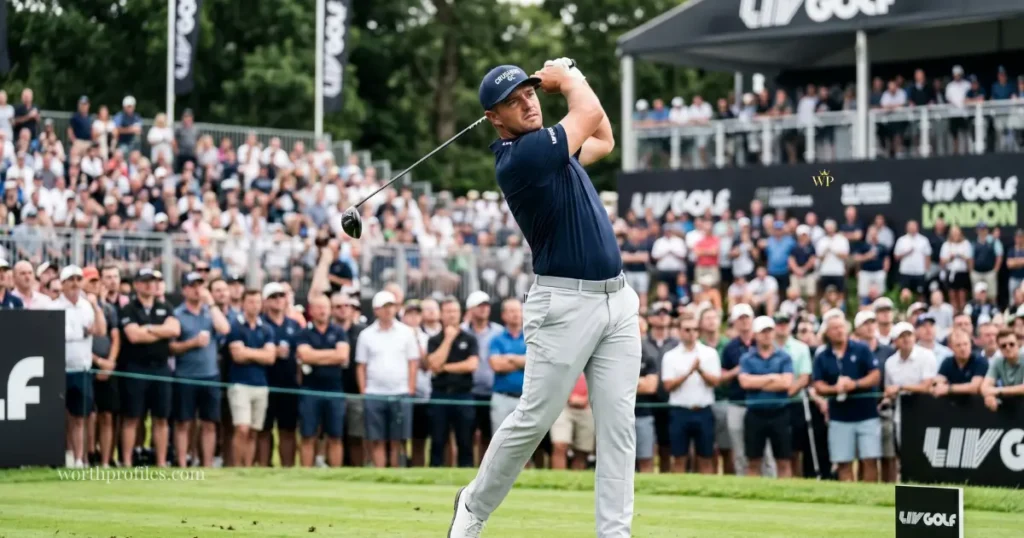
Several reports suggested Bryson DeChambeau received a LIV Golf deal potentially worth over $100 million, though exact figures were never officially confirmed. Some reports estimated his agreement could have exceeded that number depending on bonuses, future payouts, and team-related earnings. Other estimates landed lower, especially when separating guaranteed money from performance incentives.
Because LIV Golf contracts are private, many published estimates are based on reporting from sports business outlets rather than official disclosures. Some figures may include projected earnings and bonuses instead of guaranteed cash payments alone.
That kind of uncertainty is common with modern sports contracts. Private negotiations rarely become fully public, especially in newer leagues competing aggressively for star athletes.
Even so, one thing became obvious. The scale of the money changed everything.
Beyond guaranteed contract value, LIV Golf players also receive tournament payouts, team earnings, bonuses, and appearance-related income. Bryson quickly became one of the league’s most recognizable stars, which increased his market value even further.
Bryson also became the captain of Crushers GC, one of LIV Golf’s team franchises. Team competitions added another layer to the league’s business model because players could earn money through both individual and team performances.
His aggressive style helped. So did the controversy.
Whether fans loved the LIV move or hated it, people kept talking about him. In sports business, attention often turns into money.
How LIV Golf Changed His Financial Status
Yes, LIV Golf significantly increased Bryson DeChambeau’s overall wealth. Guaranteed contract money, bonuses, and broader public attention pushed his earnings far beyond traditional PGA Tour income structures.
Before LIV Golf, Bryson DeChambeau was wealthy but still operating mostly within traditional PGA Tour earnings structures. Tournament winnings mattered most. Sponsorships added another layer.
LIV Golf shifted the balance.
Suddenly, guaranteed contracts became just as valuable as tournament performance. That reduced financial pressure and gave players a level of income security rarely seen in golf before.
Here’s the thing: some golf fans still argue that LIV money inflated athlete wealth artificially. That argument is understandable. From a business perspective, though, Bryson took advantage of a changing sports market at exactly the right time.
That decision massively increased his long-term earning power.
Before vs After LIV Golf
| Before LIV Golf | After LIV Golf |
|---|---|
| Tournament-dependent earnings | Guaranteed contract payouts |
| Traditional PGA Tour structure | Massive LIV Golf earnings |
| Steady sponsorship growth | Broader global attention |
| Performance-driven income | Greater financial stability |
Before joining LIV Golf, Bryson DeChambeau was already among golf’s highest-earning active players thanks to tournament success and endorsement growth. After the LIV move, his earning ceiling changed completely because guaranteed contract money became a much larger part of his overall income.
Traditional golf earnings usually depend heavily on weekly tournament results, while LIV Golf introduced far more financial security for elite players. Bryson’s overall wealth reportedly grew much faster once those guaranteed payouts entered the equation.
Bryson DeChambeau Career Earnings
Bryson DeChambeau’s career earnings come from several sources, including tournament prize money, LIV Golf payouts, endorsement deals, and appearance fees. His PGA Tour career prize money alone has reportedly exceeded $30 million.
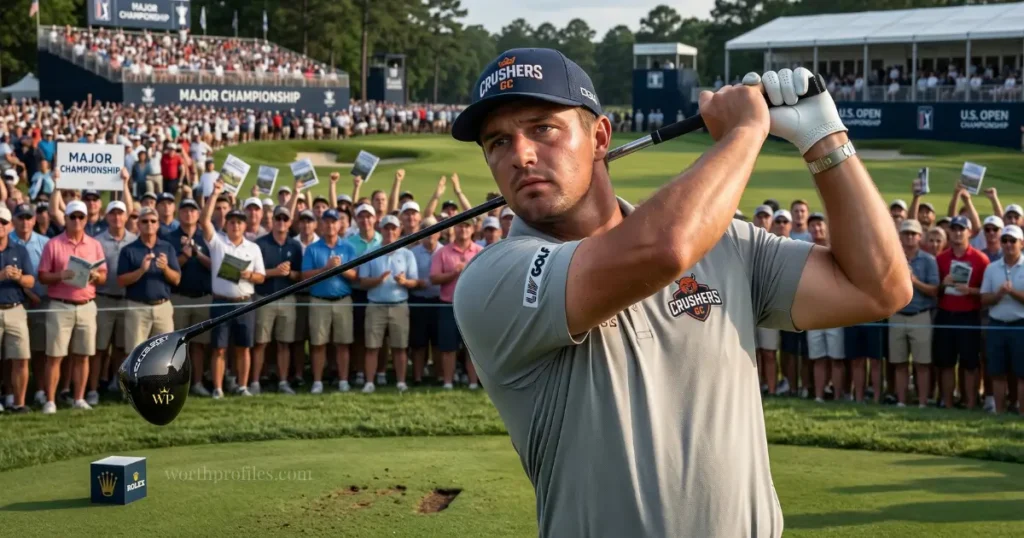
His PGA Tour success built the foundation of his wealth. Tournament wins, ranking bonuses, FedEx Cup payouts, and major championships helped him become one of the most talked-about golfers in the sport.
Strong finishes in FedEx Cup standings can significantly increase a golfer’s yearly income because the PGA Tour awards large bonus pools based on season-long performance. Those payouts became another important part of Bryson’s career earnings during his PGA Tour years.
His biggest early financial milestones included:
- winning the 2020 U.S. Open
- multiple PGA Tour victories
- top world rankings
- major sponsorship growth
Professional golfers at Bryson’s level can earn millions in a single season through tournament finishes alone. For professional golfers, yearly income can swing heavily depending on tournament finishes, sponsorship renewals, and bonus structures. One strong season or a major championship win can dramatically increase both prize money and endorsement value.
PGA Tour Winnings
During his PGA Tour years, Bryson DeChambeau earned tens of millions in official prize money.
That total includes:
- tournament payouts
- playoff bonuses
- major championship earnings
- FedEx Cup performance rewards
He became known for overpowering golf courses with distance and aggressive play. That style attracted huge attention from both fans and sponsors.
Not everyone loved it.
Some traditional golf followers believed his power-focused approach changed the sport too much. Others thought it made golf more exciting and modern. Either way, it increased his visibility, and visibility drives sponsorship value.
U.S. Open Victories and Career Achievements
Winning major championships changed Bryson’s career permanently.
His U.S. Open victory in 2020 gave him:
- worldwide recognition
- stronger endorsement leverage
- higher media value
- elite player status
Major Career Achievements
- U.S. Open Champion (2020)
- Multiple PGA Tour victories
- LIV Golf star player
- Former top-ranked golfer
- NCAA Division I Champion
- U.S. Amateur winner
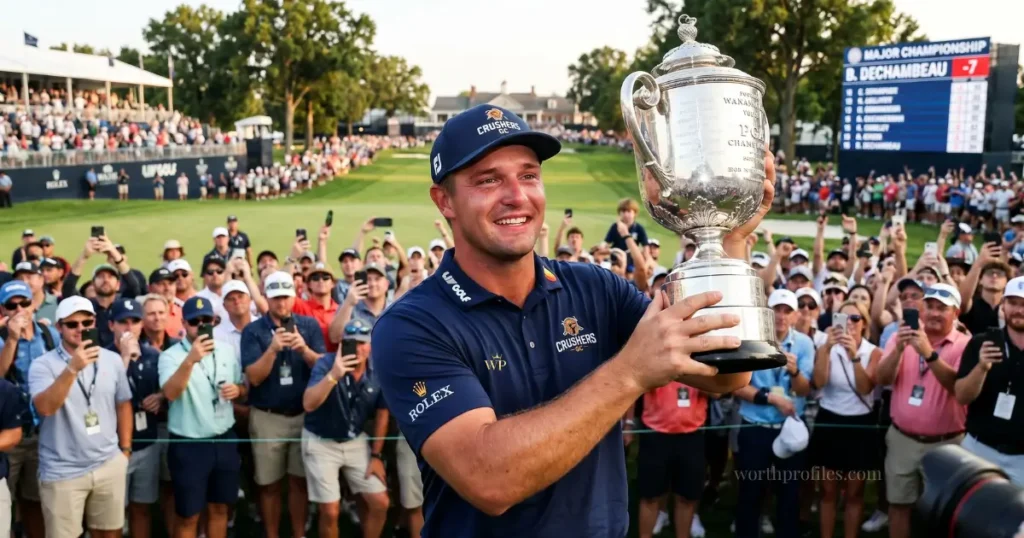
Major wins matter financially because sponsors prefer athletes with championship credibility.
Bryson also spent time near the top of the Official World Golf Ranking during the peak of his PGA Tour career. High rankings often increase endorsement value because sponsors prefer athletes with strong global visibility.
Bryson also built a reputation as one of golf’s most unique personalities. He studied swing mechanics obsessively, experimented with equipment, and treated golf almost like a physics project.
Sometimes it looked unusual. It also worked.
Endorsements and Sponsorship Deals
Sponsorship deals are a major part of modern athlete wealth. In Bryson DeChambeau’s case, endorsements from golf equipment brands and sports companies helped increase his income far beyond tournament winnings alone.
Endorsements became another major piece of Bryson DeChambeau’s wealth.
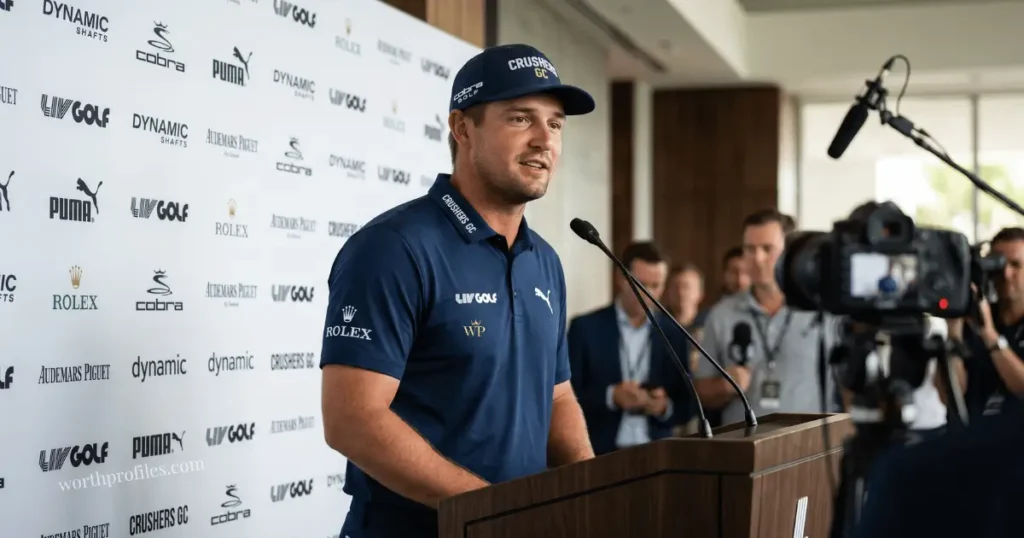
Over the years, he partnered with brands connected to:
- golf equipment
- apparel
- sports performance
- luxury products
Companies value athletes who stand out, and Bryson definitely does.
His sponsorship history has included relationships with brands like Cobra Golf and Bridgestone Golf, along with apparel and equipment partnerships tied to his public image. His endorsement portfolio expanded as his public profile grew because his combination of power, analytics, and controversy made him highly marketable.
Sponsors often value athletes who generate attention even when opinions are divided.
In modern sports, sponsorship value often depends just as much on visibility and audience engagement as on results alone. Athletes who stay in headlines and build strong online followings can remain highly marketable even during quieter competitive periods.
He also benefited from the rise of athlete-driven media. Golf content performs especially well on YouTube and social platforms, and Bryson’s growing online audience helped increase his visibility outside tournament play. That exposure can raise sponsorship value because brands now care heavily about digital reach alongside athletic success.
Customized Clubs and Scientific Playing Style
Bryson DeChambeau built his public identity around science and precision.
He became famous for:
- single-length irons
- detailed swing analysis
- fitness-driven power training
- unconventional golf strategies
This separated him from other golfers almost immediately.
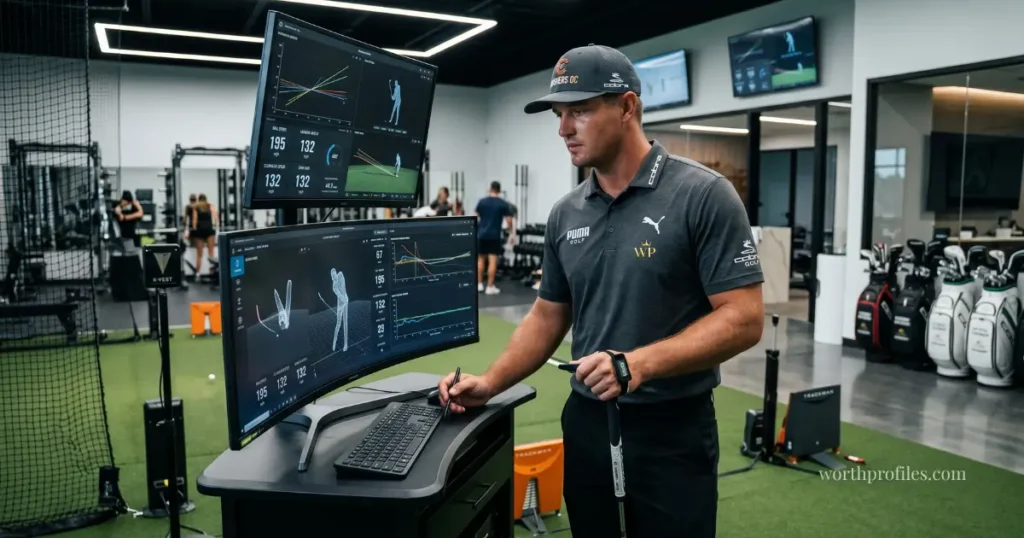
Some fans saw him as innovative. Others thought he overcomplicated the game. Either way, the branding worked because people remembered him.
That uniqueness helped his marketability.
Athletes with strong personal brands usually attract better sponsorship opportunities than athletes who blend into the crowd.
Early Life and Collegiate Career
Bryson was born in California and developed his golf skills at a young age. He later played college golf at Southern Methodist University, where he became one of the top amateur golfers in the country.
His amateur career included major achievements.
One of the biggest came in 2015 when he won the NCAA Division I championship and the U.S. Amateur in the same year. Very few golfers have managed both accomplishments.
His amateur success also increased his visibility with sponsors and golf brands before he fully entered the professional ranks. Winning major amateur titles gave him credibility early, which helped create momentum once he turned pro.
Very few golfers arrive with that level of attention already attached to their name.
Start of Professional Career
Bryson turned professional in 2016 and started gaining attention almost immediately.
His unusual approach made headlines early. So did his confidence.
Some players struggled to understand his methods, especially his focus on analytics and equipment customization. Bryson leaned into that image instead of avoiding it.
He continued climbing the rankings, winning tournaments, and building a reputation as one of golf’s most unpredictable stars.
Personal Life and Real Estate
Bryson DeChambeau keeps much of his private life relatively quiet compared to some athletes. Even so, reports over the years linked him to luxury real estate and high-end lifestyle spending tied to his growing earnings.
Successful golfers often invest heavily in:
- property
- travel
- training facilities
- recovery and fitness equipment
Reports have also linked Bryson to high-end training investments focused on fitness, recovery, and performance technology. That fits his overall approach to golf because he has long treated physical conditioning and sports science as central parts of his competitive strategy.
That mindset became part of his brand.
Bryson’s fitness transformation alone became a huge story in golf media. He added significant muscle mass to increase driving distance, which completely changed the way many people viewed modern golf training.
You can debate whether the approach improved the sport overall. Some traditionalists still dislike it. Financially, though, his visibility increased dramatically afterward.
How Bryson DeChambeau Built His Wealth
Bryson’s fortune did not come from one source alone.
His wealth grew through a combination of:
- tournament winnings
- LIV Golf guarantees
- sponsorships
- endorsements
- media visibility
- long-term golf branding
Athletes who depend only on competition income often see financial swings during weaker seasons. Bryson expanded beyond that model by becoming both a sports figure and a recognizable brand.
That shift is becoming more common across professional sports because athletes now function like media brands as much as competitors. Large audiences on YouTube, Instagram, and social media can increase long-term earning power even outside tournament play.
His YouTube presence helped too. Golf content performs extremely well online, especially when it mixes instruction, entertainment, and personality-driven content. Bryson’s style fits that environment naturally, and digital exposure continues to strengthen his long-term sponsorship value.
Golf content has grown rapidly across YouTube and social media over the last few years, especially among younger sports audiences. Players with strong online visibility can attract additional sponsorship opportunities because brands now value audience engagement almost as much as tournament success.
One area where reasonable people may disagree is the long-term impact of LIV Golf on player reputations. Some fans believe the move hurt legacy discussions. Others think the financial upside made the decision obvious. Either way, Bryson’s bank account benefited massively from the shift.
Is Bryson DeChambeau One of the Richest Golfers?
Bryson DeChambeau is one of the wealthiest active golfers in the world, although his estimated net worth is still lower than golf legends like Tiger Woods and Phil Mickelson.
| Golfer | Estimated Net Worth | Main Income Source |
|---|---|---|
| Tiger Woods | $1 Billion+ | Golf & Endorsements |
| Phil Mickelson | $300 Million+ | Golf & Sponsorships |
| Dustin Johnson | $100 Million+ | Golf & LIV Golf |
| Brooks Koepka | $60 Million+ | Golf & Sponsorships |
| Bryson DeChambeau | Around $50 Million | LIV Golf & Endorsements |
Still, Bryson belongs comfortably among the modern generation of highly paid golfers alongside players like:
- Brooks Koepka
- Dustin Johnson
His earnings trajectory remains strong because he still has:
- sponsorship value
- competitive relevance
- media attention
- global golf recognition
That combination creates staying power.
Frequently Asked Questions
What is Bryson DeChambeau’s salary?
Bryson DeChambeau does not have a traditional yearly salary like athletes in some team sports. His income comes from tournament winnings, LIV Golf payments, sponsorships, bonuses, and endorsement deals.
How much did LIV Golf pay Bryson DeChambeau?
Reports suggest Bryson DeChambeau’s LIV Golf contract could have been worth more than $100 million, although exact figures were never officially confirmed publicly.
Who sponsors Bryson DeChambeau?
Over the years, Bryson has worked with brands tied to golf equipment, apparel, and sports performance, including Cobra Golf and Bridgestone Golf.
How much has Bryson DeChambeau earned from golf?
His career prize money and tournament earnings alone total tens of millions of dollars, and that number rises significantly once endorsements and LIV Golf income are included.
Is Bryson DeChambeau one of the richest golfers?
He is among the wealthiest active golfers today, though legends like Tiger Woods and Phil Mickelson still rank much higher overall in lifetime wealth.
Conclusion
Bryson DeChambeau’s estimated $50 million net worth in 2026 reflects far more than prize money from golf tournaments alone because his earnings now come from multiple streams tied to modern athlete branding, sponsorships, media exposure, and LIV Golf contracts. Athlete wealth estimates will always involve some uncertainty because endorsement deals, private contracts, investments, and long-term business arrangements are not fully public in most cases. After reviewing the available reports, career earnings data, and sponsorship history, the bigger story is how quickly Bryson’s financial position changed once professional golf itself started changing around him. That helps explain why he remains one of the most recognizable figures in modern golf.