

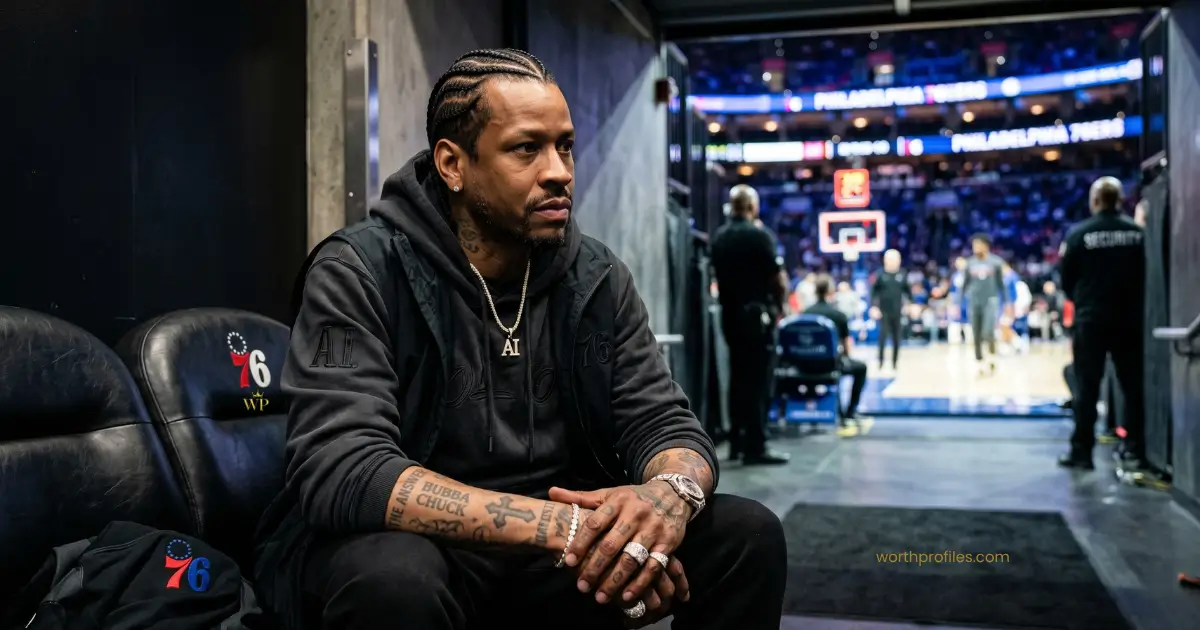
A lot of people search for Allen Iverson’s net worth because the number feels surprisingly low for a former NBA superstar. As of 2026, Allen Iverson is estimated to have a net worth of around $1 million, despite reportedly earning well over $200 million during his basketball career through salary and endorsements. That difference immediately raises questions. Fans want to know what happened to his money, whether he really went broke, and how his long-running Reebok deal still affects his finances today.
The story behind Iverson’s wealth is more complicated than most celebrity net worth headlines make it seem. He was one of the most influential players of his era, helped reshape NBA culture, and became a major force in sneaker fashion during the early 2000s. At the same time, years of heavy spending, legal costs, and expensive lifestyle habits reportedly damaged much of the fortune he built during his career. After reviewing the public reports, contracts, and endorsement history tied to Iverson over the years, I think the reason people still search for his finances today is because his story mixes success, mistakes, influence, and survival in a way very few athletes ever have.
Allen Iverson Net Worth at a Glance
- Estimated Net Worth (2026): Around $1 Million
- Age: 50
- NBA Career Earnings: Roughly $155 Million
- Biggest Endorsement Deal: Reebok lifetime partnership
- Main Income Sources Today: Licensing, appearances, endorsements
- Known For: NBA MVP, Hall of Fame career, sneaker culture influence
What Is Allen Iverson’s Net Worth in 2026?
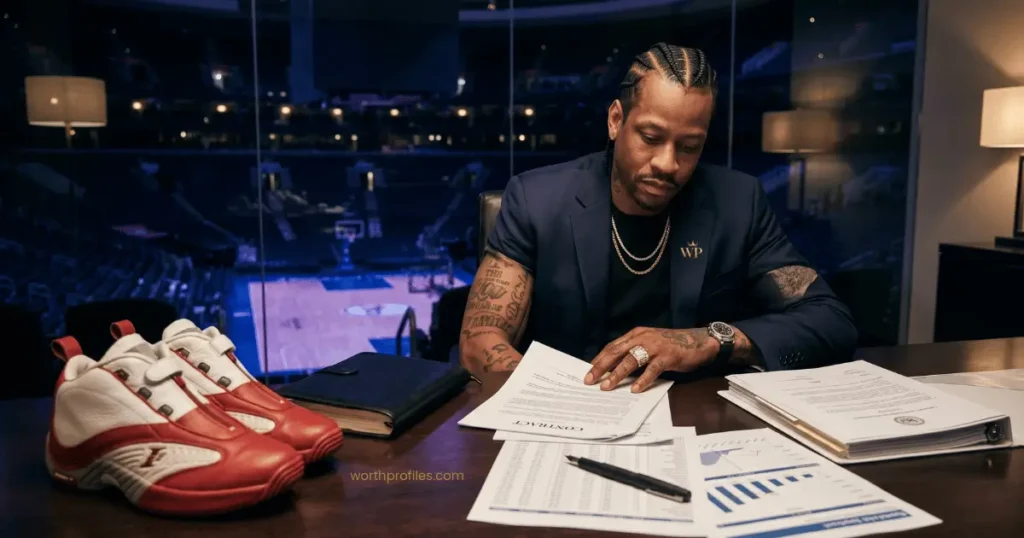
Allen Iverson’s estimated net worth in 2026 is around $1 million.
He reportedly earned well over $200 million during his NBA career through salary and endorsements, but years of heavy spending, legal costs, and financial pressure reduced much of that wealth over time. His long-term partnership with Reebok still plays a major role in his financial situation today.
For many fans, that number still feels surprisingly low.
Celebrity net worth estimates should always be viewed as educated approximations rather than exact financial statements. Former athletes often have private investments, ongoing legal obligations, taxes, licensing agreements, and future payouts that are not publicly disclosed in full.
That makes precise calculations difficult even for major financial publications.
Different celebrity finance sites still publish different numbers because public financial information is limited. Some websites focus mainly on career earnings, while others estimate debts, assets, and future endorsement payouts at the same time.
That’s why estimates for retired athletes can vary widely online.
Early Life and Basketball Rise
Allen Iverson was born in Hampton, Virginia, in 1975. He became one of the most talented young athletes in the country long before entering the NBA. Basketball quickly became his path toward national recognition.
His college career at Georgetown University made him a major NBA prospect. Coaches and scouts viewed him as one of the fastest and most explosive guards in basketball.
Everything changed after the 1996 NBA Draft.
The Philadelphia 76ers selected Iverson with the first overall pick, and he immediately became one of the league’s biggest stars.
Allen Iverson’s NBA Career
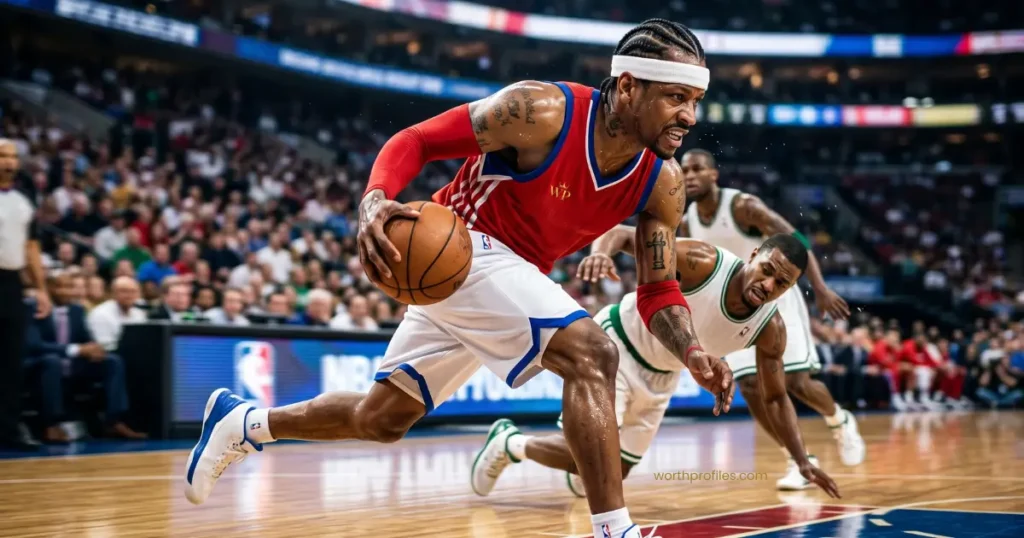
Iverson built his NBA reputation through speed, scoring, toughness, and fearless play. Even though he stood around six feet tall, he constantly attacked bigger defenders without hesitation.
Fans loved his fearless style. Defenders hated trying to stop him.
During his career, Iverson played for:
- Philadelphia 76ers
- Denver Nuggets
- Detroit Pistons
- Memphis Grizzlies
His greatest success came in Philadelphia. He won the NBA MVP award in 2001 and led the 76ers to the NBA Finals that same season.
Iverson became one of the most recognizable athletes in America during the early 2000s. You could still see that influence across the NBA today because many younger players adopted parts of his style, fashion choices, and confidence.
Very few NBA players influenced basketball culture at that level.
Allen Iverson NBA Career Earnings and Salary
Allen Iverson reportedly earned around $155 million in NBA salary alone during his professional basketball career.
His biggest contracts came during his peak years with the Philadelphia 76ers and Denver Nuggets. At the time, he ranked among the highest-paid guards in basketball.
| Income Source | Estimated Earnings |
|---|---|
| NBA Salary | ~$155 Million |
| Reebok Endorsement Deal | Multi-million lifetime agreement |
| Sponsorships & Appearances | Millions over career |
| Current Income Sources | Licensing, appearances, partnerships |
That salary total does not include endorsements.
When sponsorship deals, appearances, and licensing income are added, estimates of Iverson’s total career earnings often exceed $200 million.
For many fans, that makes his current estimated net worth even more surprising.
| Year | Career & Financial Milestone |
|---|---|
| 1996 | Drafted No. 1 overall by the Philadelphia 76ers |
| 2001 | Won NBA MVP and reached NBA Finals |
| 2000s | Signed major Reebok endorsement deals |
| 2010 | Played basketball overseas in Turkey |
| 2016 | Inducted into the Basketball Hall of Fame |
| Future Payout | Expected access to Reebok trust fund later in life |

Endorsements and the Reebok Deal
Iverson’s partnership with Reebok eventually became one of the most recognizable endorsement deals in basketball.
His signature shoe line became extremely popular during the late 1990s and early 2000s. The Reebok Question sneakers especially became a major part of basketball and streetwear culture.
One reason the partnership stood out was timing. During the late 1990s and early 2000s, sneaker companies competed aggressively for NBA stars who could influence both basketball fans and streetwear culture at the same time. Iverson fit that role perfectly because his image connected sports, music, and fashion naturally.
That made the partnership much bigger than a normal athlete endorsement deal.
Sponsorship Earnings
The exact amount Iverson earned from Reebok has never been fully confirmed publicly. Still, reports over the years have suggested he made tens of millions through endorsement agreements, royalties, and long-term compensation structures.
That partnership became financially important long after his playing career ended.
Reebok Trust Fund Explained
One of the most discussed parts of Iverson’s finances is the reported Reebok trust fund connected to his endorsement deal.
Reebok reportedly created a trust fund for Allen Iverson worth around $32 million. Public reports have stated that he gains access to the money later in life, around age 55.
The trust was designed to protect long-term wealth instead of paying the entire amount immediately. Reports over the years have suggested the fund continues growing through investments and delayed payouts, although the full agreement has never been publicly released.
Reebok Trust Fund Summary
Estimated Value: Around $32 Million
Reported Access Age: Around age 55
Purpose: Long-term financial protection through delayed payouts and investments
Why It Matters: The trust fund remains one of the biggest reasons Allen Iverson still has long-term financial support after retirement.
In simple terms, the Reebok deal acts like a long-term financial safety net tied to Iverson’s endorsement partnership.
Long-term endorsement structures like this are designed to protect athletes from short-term financial mistakes later in life. Similar arrangements have become more common in professional sports because guaranteed future payouts can create stability long after a player’s active income declines.
That distinction matters.
Was Allen Iverson Broke?
Allen Iverson faced serious financial problems, but public reports never confirmed that he completely lost all of his money.
Many reports focused on debt issues, legal expenses, and heavy spending during and after his NBA career. At the same time, Iverson still had future endorsement income, appearance opportunities, and long-term value connected to his Reebok partnership.
Cash flow problems are different from having no financial assets at all.
Public discussions about celebrity finances can become exaggerated online. In Iverson’s case, many reports focused heavily on debt problems and financial strain, while future endorsement income and long-term agreements still provided financial value that many former athletes do not have.
Main Reasons Allen Iverson Lost Wealth
- Expensive lifestyle and luxury spending
- Large entourage and personal expenses
- Legal and divorce-related costs
- Reduced NBA income after retirement
- Long-term financial pressure and debt issues
Financial Problems and Legal Troubles
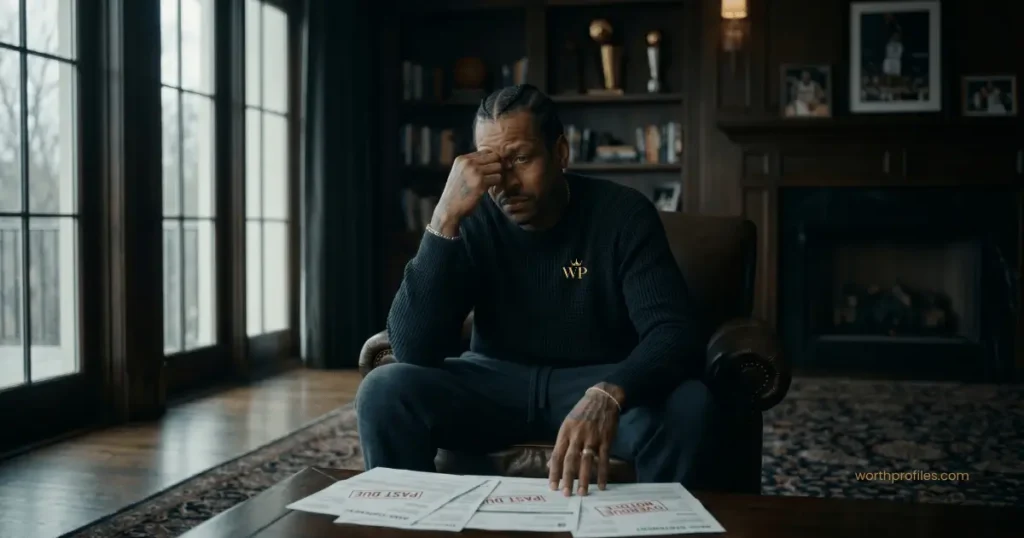
Iverson’s financial issues became public years after his NBA peak. Reports described expensive spending habits, legal disputes, unpaid debts, and financial pressure tied to his lifestyle.
His lifestyle was expensive. In some periods, extremely expensive.
NBA careers end quickly. Lifestyle habits often do not.
That pattern is not unique to Iverson. Financial experts and former athletes have discussed for years how difficult retirement can be for players who become wealthy very young and suddenly lose their largest source of income.
The adjustment can be harder than many fans realize.
Similar conversations have followed other former NBA players who struggled financially after retirement, including Kwame Brown’s financial journey.
Quick note: athlete wealth often looks unlimited from the outside, but long-term expenses, taxes, entourages, and legal costs can drain fortunes much faster than people expect.
House, Cars, and Lifestyle
During his NBA peak, Iverson lived like one of basketball’s biggest celebrities. Reports over the years linked him to luxury homes, expensive jewelry, designer clothing, private travel, and luxury vehicles.
At his peak, he spent freely.
Reports during his playing career often highlighted expensive jewelry purchases and luxury cars as part of his superstar image. That lifestyle matched the image many fans associated with elite NBA athletes during the early 2000s.
Some fans admired it. Others saw it as reckless.
Both reactions followed him throughout his career and retirement years.
Current Income Sources
Allen Iverson still earns money through public appearances, licensing deals, endorsements, interviews, basketball events, and media projects connected to his NBA legacy.
Former NBA stars with strong cultural influence often continue generating income long after retirement because their name recognition still carries business value. Iverson remains highly recognizable worldwide due to his Hall of Fame career, sneaker legacy, and influence on basketball culture.
That kind of visibility still carries business value today.
Iverson still appears at NBA events, basketball interviews, fan conventions, documentaries, and media projects connected to his career and legacy.
Licensing deals and endorsement partnerships may not produce the same income as NBA contracts, but they can still provide long-term financial stability.
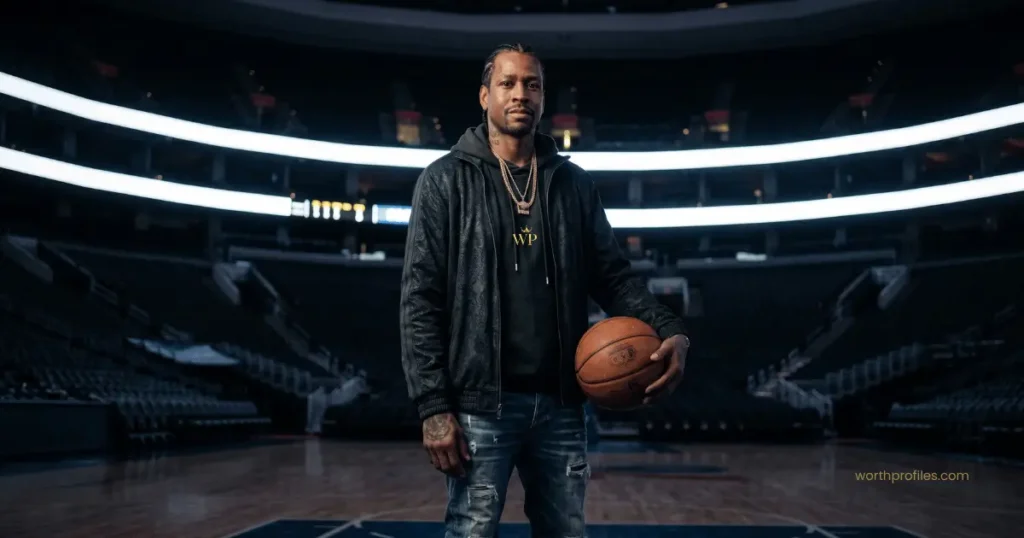
Legacy Beyond Basketball
Allen Iverson is remembered as one of the most influential basketball players of his generation because he helped reshape NBA culture, fashion, sneaker marketing, and player branding.
His Hall of Fame career and crossover influence connected basketball, hip-hop, and streetwear culture in a way that changed how many athletes presented themselves publicly. Many modern NBA players now control their personal brands more openly, and Iverson played a major role in that shift.
Very few NBA players influenced basketball culture at that level.
His influence also extends into basketball history itself. Iverson’s Hall of Fame career helped cement his place among the most recognizable guards of his generation, even years after retirement.
His financial story also became a widely discussed example of how quickly athlete wealth can change after retirement.
That balance is part of why Iverson’s story still resonates years later. Some people remember the financial mistakes first, while others focus on how he changed basketball culture, player expression, and athlete branding during a major turning point for the NBA.
Both views can exist together.
Key Takeaways
- Allen Iverson’s estimated net worth in 2026 is around $1 million.
- He reportedly earned more than $200 million during his basketball career.
- His Reebok partnership remains financially important years after retirement.
- Luxury spending and legal costs affected his long-term wealth.
- Iverson still earns money through appearances, licensing, and endorsements.
FAQ
What is Allen Iverson’s net worth in 2026?
Allen Iverson’s estimated net worth in 2026 is around $1 million, although public estimates still vary.
How much did Allen Iverson make in the NBA?
Allen Iverson reportedly earned around $155 million in NBA salary during his professional basketball career.
Does Allen Iverson still get paid by Reebok?
Yes. Allen Iverson still benefits from his long-term relationship with Reebok through endorsement agreements and a reported trust fund connected to his lifetime partnership with the company.
How much did Allen Iverson make from Reebok?
The exact amount has never been fully confirmed publicly, but reports over the years have suggested Allen Iverson earned tens of millions of dollars through his long-term Reebok partnership, including a reported trust fund arrangement tied to the deal.
Did Allen Iverson lose all his money?
Not entirely. Allen Iverson experienced major financial problems and reportedly lost much of his wealth through spending and legal issues, but future endorsement payouts and business agreements still provide financial support.
Why is Allen Iverson still famous today?
Allen Iverson remains influential because of his basketball style, sneaker legacy, cultural impact, and role in changing NBA fashion and athlete branding.
Conclusion
Allen Iverson’s financial story is far more complicated than a simple celebrity net worth headline. He earned enormous money during his NBA career, became one of basketball’s biggest cultural icons, and still maintains long-term value through endorsements and public recognition. At the same time, years of spending, legal pressure, and financial mistakes reportedly reduced much of the fortune he once built. Stories like Iverson’s also explain why modern athletes now invest more heavily in financial advisors, long-term contracts, and wealth management planning earlier in their careers. If there’s one practical takeaway here, it’s that earning millions and building lasting wealth usually require very different habits.